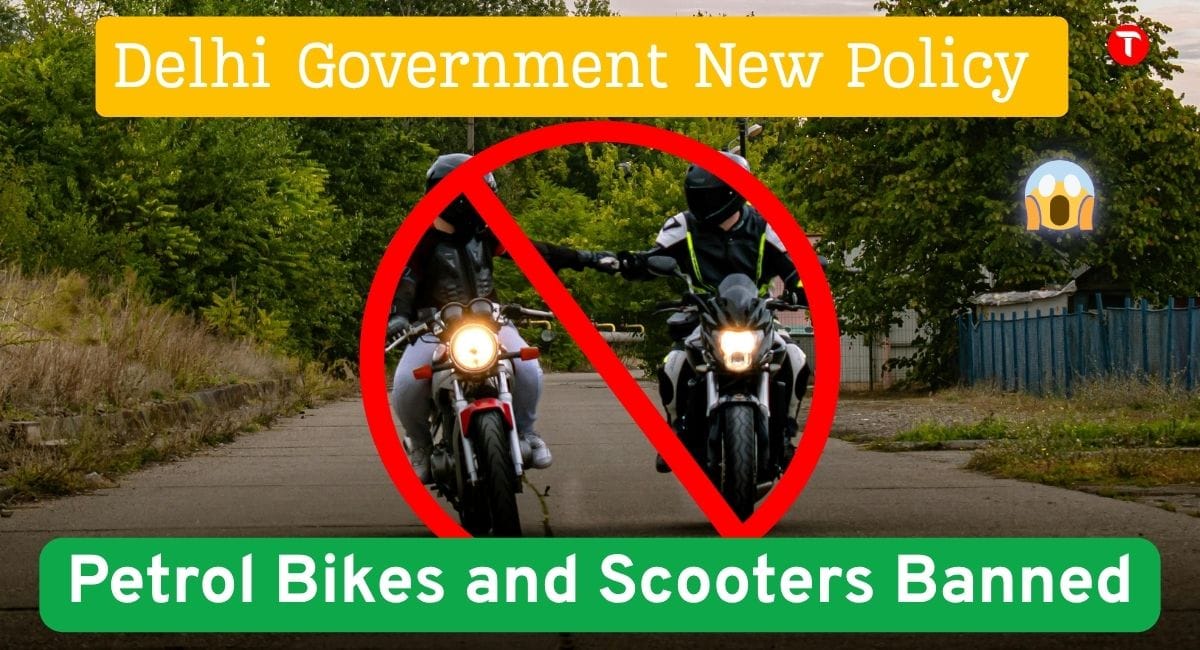
Delhi Government New Policy 2026: It is being reported and widely believed that the Delhi government has decided to introduce a new policy aimed at curbing the rising pollution levels in the city, which are largely attributed to the increased use of petrol and diesel.
Under this proposed policy, the registration of petrol-powered two-wheelers could potentially be halted. Today, we will delve into this matter to understand exactly what this entails, whether such a measure is feasible, and what specific changes are likely to affect both two-wheelers and four-wheelers in the coming years.
Furthermore, we will explore the various provisions and possibilities emerging under this new policy framework. We will provide you with a detailed breakdown of what “Policy 2.0” will entail, the potential changes it may bring about, and the significant impact these measures could have on the public.
Table of Contents
What is the Discussion About ?
Delhi Government New Policy 2026: Regarding the ongoing discussions, reports suggest that the Delhi government is poised to introduce a major amendment to its upcoming Electric Vehicle (EV) policy. This move is expected to have a significant and perhaps the most substantial impact on two-wheeler buyers within the capital city.
According to the proposed “Policy 2.0,” there is a strong possibility that the registration of petrol-powered two-wheelers could be discontinued starting April 1, 2028.
Consequently, it is speculated based on insights from various sources that within a few years, the only two-wheelers available on the roads will be electric ones. Let us explore this in greater detail.
What Will the Delhi Policy Entail ?
Delhi Government New Policy 2026: Speaking of the Delhi policy, reports indicate that as per the measures being undertaken by the Delhi government the two-wheeler sector is likely to feature prominently at the very core of the city’s electrification plans.
There are several reasons for this; two-wheelers (comprising motorcycles and scooters) are considered to constitute the largest segment of vehicles on the city’s roads. Given their extensive daily usage, they are identified as a major contributor to pollution levels.
Consequently, the government has decided to take specific measures work on which is currently underway to address this issue. It is further reported that restrictions may be imposed on the most heavily polluting vehicles, and their sales could also be significantly impacted.
What are The new policy framework ?
Delhi Government New Policy 2026: Additionally, under this new policy framework, this specific vehicle segment This development could have a significant impact on the sector and may potentially extend to other segments as well.
Furthermore, it is being reported that starting January 1, 2027, the registration of vehicles in Delhi may be restricted exclusively to electric three-wheelers.
there is a strong likelihood of this scenario materializing. To facilitate the widespread adoption of this transition, the Delhi government is introducing various schemes. Under these initiatives, there is a strong possibility that purchasers of electric two-wheelers priced up to ₹2.25 lakh (ex-showroom) could receive an incentive of ₹10,000 per kilowatt-hour, capped at a maximum benefit of ₹30,000.
What specific government incentives to be ?
Delhi Government New Policy 2026: These specific government incentives may see a gradual reduction during the second and third years of implementation. Additionally, if this policy is formally enacted, it is suggested that until March 31, 2030, electric cars priced up to ₹30 lakh could be granted a complete exemption from both road tax and registration fees.
This measure is expected to accelerate the expansion of charging infrastructure across the city, thereby encouraging greater public engagement with nand interest in electric vehicle charging facilities. However, it is important to note that this remains a draft policy and has not yet been formally implemented by the government.
The government has reportedly released this draft for public consultation to solicit feedback and gauge public opinion; consequently, there is a possibility that certain modifications may be made before the policy is finalized and officially put into effect.