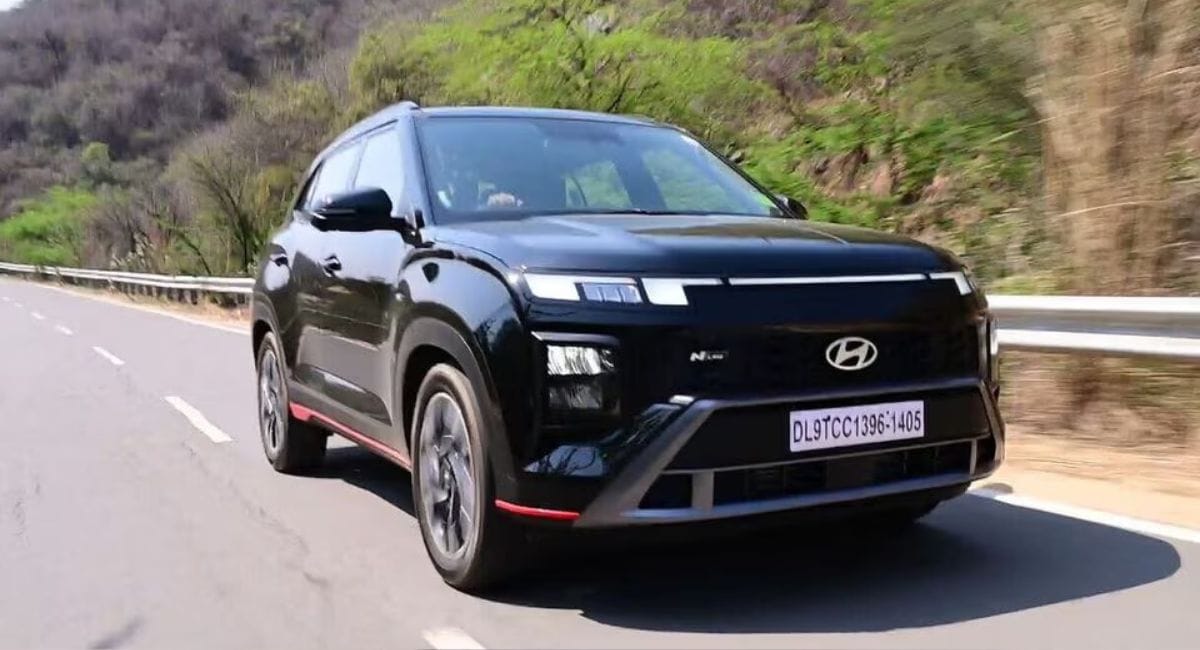
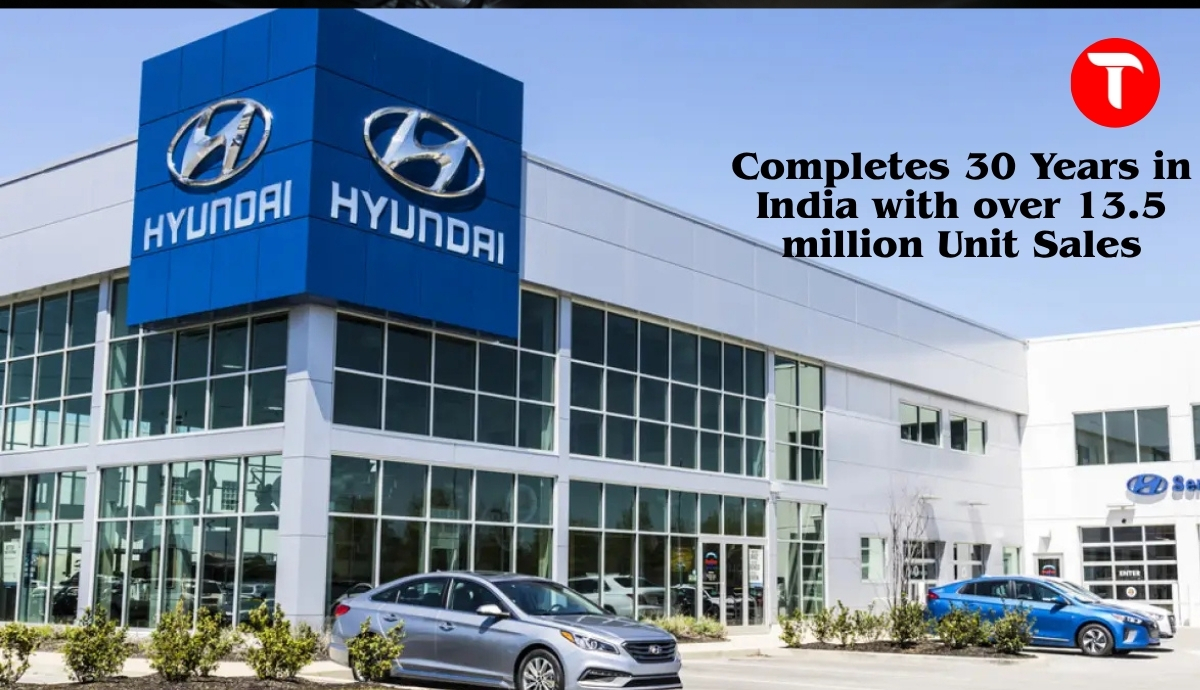
Hyundai Motor: Hyundai Motor is one of the country’s long-standing automotive companies, having earned immense trust in the Indian market due to the robust performance and durability of its vehicles. Today, it has evolved into one of the most recognized automotive brands in the industry.
Hyundai Motor has recently completed 30 years of operations; notably, to mark this milestone, the company has achieved an impressive cumulative sales figure of 13.5 million vehicles, solidifying its status as a renowned and popular brand.
The company consistently provides features and amenities tailored to the specific needs of its customers. Furthermore, if certain features are found to be lacking in a particular model, Hyundai incorporates customer-preferred features and comfort-enhancing amenities in subsequent updates a practice that offers significant benefits to its patrons.
On the occasion of its 30th anniversary, the company has set a remarkable new objective; let us explore what that entails.
Table of Contents
Journey of Hyundai Motor
Hyundai Motor: Tracing the journey of Hyundai Motor India Limited from its inception on May 6, 1996, to the present day, the company has successfully sold a total of 13.5 million vehicles. This impressive figure comprises 9.6 million domestic sales and 3.9 million exports.
Throughout its history, the brand has garnered recognition not only within India but also across international borders. Over the past several years, the company has generated substantial profits, a factor that has cemented its position as one of today’s most popular and successful automotive enterprises.
Furthermore, its Indian subsidiary has emerged as a pivotal strategic export hub catering to markets across the Middle East, Africa, and Latin America. From this base, it exports popular models—such as the Verna and Grand i10—to approximately 150 countries, including Saudi Arabia, South Africa, and Mexico.
The brand has achieved immense popularity in these regions—a trend that is poised to continue in the future.
Key Transformations and Milestones
Hyundai Motor: Reflecting on its evolution, when Hyundai Motor first entered India in the 1990s, it was a relatively unknown entity. However, as time progressed, the company carved out a distinct and formidable identity within the Indian market—a feat achieved through sheer hard work and the superior performance of its vehicles.
It successfully leveraged the market’s status as a high-growth economy characterized by a vast population… Despite the relatively low rates of vehicle ownership prevalent at the time, the company capitalized on this situation by incorporating enhanced reliability into its vehicles.
Notably, it established its first assembly plant in Chennai, located in the southern state of Tamil Nadu, with production commencing in 1998.
Subsequently, Hyundai developed engine and transmission facilities tailored to consumer preferences, thereby establishing what became Hyundai Motor’s first comprehensive manufacturing hub.
Its Key Highlights
Hyundai Motor: The company made a powerful debut with its first model, the Santro—considered a localized adaptation of the compact cars sold in South Korea.
Leveraging a superior strategy and a distinctive “Tall Boy” design, it subsequently garnered immense popularity in the market.
Through its astute strategy, the company focused on consumer preferences, delivering the kind of robust offerings that resonated with the public.
Good Indian Suppliers
Hyundai Motor: Consequently, in 2013, it launched a localization initiative aimed at increasing the procurement of goods from Indian suppliers. This led the company to collaborate closely with industry groups and dedicate significant effort to establishing joint ventures with global suppliers.
As a result, the average rate of procuring parts locally reached 82 percent. Over time, driven by its strategic approach and the reliable features of its robust vehicles, the company became renowned in the market and introduced a fresh paradigm for consumers.
Furthermore, by 2025, the company is projected to achieve a substantial sales volume of approximately 4.56 million vehicles, reflecting an average annual growth rate of around 10 percent a trajectory that firmly establishes it today as one of the major players in the industry.